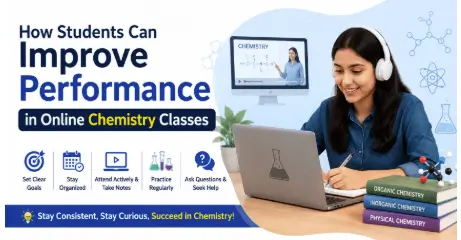
However, despite the advent of e-learning that has completely transformed the education industry over the past ten years or so, it is worth noting that chemistry remains one of the most challenging subjects for students to understand while undertaking studies at the comfort of their homes. The reason is that the topic can involve multiple activities like video presentations, forums, assignment work, and study material. Once the students lag behind, it can be challenging for them to catch up.
Whereas conventional schooling ensures that learners are constantly under surveillance, online learning programs in chemistry make it imperative for the learner to have self-discipline irrespective of whether there is any form of external supervision. Such disciplines like organic chemistry, molecular structures, chemical reactions, and thermodynamics necessitate continuous studies and grasping of ideas. A learner may have difficulties comprehending concepts and performing excellently in examinations due to poor attendance.
And here is some good news: with proper studying skills and correct organization, your academic achievements might be greatly improved. No matter whether it is a chemistry lab report or online test that gives you a headache or even all those tasks together, there is more than one way to cope with all that without burning yourself out in the process.
Why Online Chemistry Classes Feel More Difficult
Chemistry lessons done online entail both theoretical studies and analysis, hence they are very challenging compared to other online courses. It is important to know why the students fail before we can enhance their performance.
Lack of Hands-On Laboratory Experience
Laboratory sessions in traditional chemistry classes incorporate activities of observing, using equipment, and carrying out experiments. However, in the case of the virtual class system, there will be a need for simulated and video-based experiments as opposed to the traditional practical sessions. This may make it difficult for learners to understand scientific concepts.
Practical knowledge of these concepts may be difficult to obtain due to the theoretical approach. In the case of visual and tactile learning, students would find it difficult to understand chemistry online.
Information Overload and Fast-Paced Modules
Chemistry courses done online may have a number of topics taught in a short while. This is because one topic may be made up of several activities such as video presentations, forums, assignments, and reading material. When learners fall behind, it may become difficult for them to catch up.
This pressure becomes more intense for learners balancing:
- part-time jobs
- internships
- family responsibilities
- multiple online courses
As deadlines pile up, stress levels rise and academic performance can decline.
Limited Real-Time Interaction
However, students in traditional learning environments have the ability to ask questions in the classroom. In some cases, in digital learning environments, this is discouraged because the learning process takes place individually. This leads to delayed feedback from the educators, which might result in misunderstandings regarding the formulas and other assignments.
Effective Study Techniques for Online Chemistry Students
Intelligence is not the sole factor for success in chemistry. The consistency, organization, and use of active learning approaches can be more effective.
Break Complex Topics Into Smaller Sections
Studying chemistry concepts becomes easy if done in parts rather than in long sittings. Instead of cramming multiple chapters in six hours all at once, one can study in parts like:
- chemical bonding
- stoichiometry
- acids and bases
- organic reactions
- periodic trends
Short study blocks improve concentration and help students retain information more effectively.
Use Visual Learning Methods
Diagrams, structural formulas, and chemical reaction processes are abundant in chemistry studies. Visual learning methods could help to increase the speed of learning.
Helpful methods include:
- drawing molecular structures
- using color-coded notes
- creating flowcharts for reactions
- watching animated chemistry tutorials
- using digital flashcards for formulas
Students who use visual learning are able to understand hard concepts much quicker than those who learn from books alone.
Practice Numerical Problems Regularly
The most common mistake that students make when studying chemistry is to study theoretical concepts without answering enough practice questions.
Students should dedicate time each week to:
- balancing equations
- solving molarity problems
- practicing reaction calculations
- reviewing past quiz questions
- working on sample exam papers
Consistent practice improves both confidence and exam speed.
Time Management Strategies for Better Academic Performance
Time management is crucial for succeeding in online learning. Students do not fail because chemistry is beyond them; rather, they fail because their schedules are in disarray.
Create a Weekly Study Schedule
Having a schedule can help keep one focused. Set aside time every week exclusively for chemistry work.
Your study schedule should include:
- lecture review sessions
- assignment completion
- lab report preparation
- quiz revision
- exam practice
Using digital planners or calendar apps can help students avoid last-minute stress before deadlines.
Avoid Multitasking During Study Sessions
Usually, e-learning students try to balance their studies with socializing, reading messages, and even watching films at times. Lack of concentration due to distractions will make you forget the studied information.
Effective study sessions always translate to efficiency in less time. Most of the time, an hour of effective study sessions proves more fruitful than three hours of distracted study sessions.
Prioritize Difficult Topics First
Students often delay studying challenging topics because they feel intimidating. However, avoiding difficult chemistry chapters only increases stress later.
Instead:
- start with the hardest topic first
- review confusing concepts early
- ask questions immediately
- revisit weak areas weekly
This approach prevents knowledge gaps from building throughout the semester.
Managing Online Chemistry Assignments and Lab Reports
Assignments and lab reports form important parts of online chemistry classes. Even when a student performs well in exams, poor results in assignments and lab reports will affect their overall grade negatively.
Read Assignment Instructions Carefully
Some students earn fewer marks simply because they do not understand the format for submission. Before beginning your assignment, make sure that you know:
- review grading rubrics
- note deadline dates
- understand citation requirements
- identify key objectives
Spending a few minutes understanding instructions can prevent unnecessary mistakes.
Start Lab Reports Early
Chemistry lab reports often require:
- data analysis
- calculations
- scientific explanations
- proper formatting
Waiting until the final day creates unnecessary pressure and increases the risk of errors. Starting early allows time for revisions and deeper understanding.
Nevertheless, by the middle of the semester, some students will find themselves considering exploring other forms of academic help, such as the decision to hire someone to take my online class, to deal with the pressures of juggling multiple science courses. Although outside academic help might be helpful for students to manage their studies better, it is critical that they learn how to study on their own.
Use Academic Resources Responsibly
Many colleges provide free academic resources such as:
- tutoring centers
- virtual office hours
- peer discussion groups
- digital libraries
- recorded lectures
Students who regularly use these resources often perform better than those attempting to manage everything alone.
See also: Travel Essentials Checklist: The Ultimate Guide for Stress-Free Trips
How Academic Support Can Reduce Student Stress
Academic pressure affects both performance and mental well-being. Students should recognize that seeking guidance is normal, especially in difficult subjects like chemistry.
Join Online Study Groups
Collaborative learning improves understanding and motivation. Study groups allow students to:
- discuss difficult concepts
- compare problem-solving methods
- share revision strategies
- stay accountable
Learning with peers also reduces feelings of isolation common in online education.
Communicate With Instructors
Many students hesitate to contact professors when struggling academically. However, instructors often appreciate students who actively seek clarification and show genuine effort.
Students should:
- ask questions early
- attend virtual office hours
- request feedback on assignments
- clarify confusing instructions
Early communication can prevent misunderstandings later in the course.
Seek Ethical Academic Guidance
It is not at all bad to ask for help with your work when you find yourself burdened with too much coursework. Many individuals have asked for help through tutorials or in any other way, even help with studying and using academic websites.
The key factor here is that you do so for educational purposes.
Common Mistakes Students Should Avoid
Improving chemistry performance also requires avoiding habits that negatively affect learning outcomes.
Ignoring Small Knowledge Gaps
Chemistry concepts build upon one another. Students who skip foundational topics may struggle later with advanced chapters.
For example:
- weak understanding of atomic structure affects bonding concepts
- poor algebra skills impact chemistry calculations
- missing stoichiometry basics affects reaction analysis
Reviewing weak areas early prevents larger academic problems later.
Memorizing Without Understanding
Many students attempt to memorize formulas without understanding how concepts work. This approach may help temporarily but often fails during application-based exams.
Instead of rote memorization:
- focus on conceptual understanding
- practice applying formulas
- solve real examples
- connect theories logically
Understanding improves long-term retention significantly.
Waiting Until Exams to Study
Last-minute cramming rarely works well in chemistry because the subject requires gradual understanding and repeated practice. Students who study consistently throughout the semester usually perform better under exam pressure.
Final Thoughts
The prospect of attending chemistry lessons online can be seen as frightening and complex for the majority of students. However, success is more easily attainable by those students who possess the appropriate studying skills and regularly practice them, as well as seek assistance in cases where it is needed.
Improvement in academic results in terms of chemistry is not about finding ways to take shortcuts. Instead, it refers to having organizational skills, active learning techniques, time management, and proper use of educational tools. The most determined and motivated students are the ones who are bound to reach academic success.
By the year 2026, online education will become highly developed, and students willing to put enough effort into their studies and apply the proper learning strategies will cope with even the most difficult subjects, such as chemistry.
FAQs
Why do students struggle with online chemistry classes?
Online chemistry classes are made up of complex theories, calculations, laboratories, and individual duties. Most of the students experience difficulty in managing their coursework without classroom settings.
How can students improve concentration while studying chemistry online?
There is an option for enhancing concentration levels, such as developing areas specifically for studying, avoiding any kind of distractions, having scheduled programs, and maintaining smaller but regular study periods.
Are online chemistry classes harder than traditional classes?
Absolutely. In most cases, online chemistry lessons usually involve more self-motivation and self-study than traditional classes.
Author Bio
Emily Carter is an educational content writer specializing in online learning, chemistry education, and student success strategies. She creates practical and easy-to-understand academic content that helps students improve study habits, manage coursework effectively, and achieve better academic results.